
If you live or work in Indian River County, or frequently visit the beautiful Treasure Coast region, you will inevitably
Oct 16, 2026

Car Accident Posted on Aug 28, 2026

Artificial intelligence (AI) isn’t coming. It’s already here—and it’s becoming part of everyday life.
Millions of people now turn to tools like ChatGPT to answer questions, write emails, plan trips, research purchases, brainstorm ideas and get work done. And now, it’s increasingly being used to help evaluate insurance claims for Florida accident victims.
According to the National Association of Insurance Commissioners (NAIC), insurers are using AI across underwriting, pricing, customer service, fraud detection and claims handling. For insurance claims pertaining to auto accidents and personal injury cases, AI is being used to analyze accident images, assess damage, identify potential fraud and even help estimate ultimate claim settlement values.
Think about what this could mean after a serious car accident.
You may assume that an insurance adjuster is sitting at a desk carefully reading every page of your medical records, studying your injuries, reviewing what happened in the crash and personally deciding what your claim is worth. But today, AI technology is likely influence that decision.
That raises an important question for every accident victim: Can AI really understand what your injury has cost you?
At Hoskins, Turco, Lloyd & Lloyd, we’ve spent decades representing injured Floridians and dealing with insurance companies. The technology insurers use may be changing rapidly, but one fundamental principle has not: Your personal injury claim is about a person—not just a collection of data points.
In this article, the Florida accident attorneys at Hoskins, Turco, Lloyd & Lloyd explain how insurance AI is being used to evaluate accident claims, how these systems can impact valuations, and what to do to ensure you get maximum compensation for your claim.
After a Florida car accident, AI may influence the insurance claims process much earlier—and in more ways—than most accident victims realize.
It is important to be precise: there is not one universal “AI system” that every Florida insurance company uses. Different insurers use different proprietary systems, predictive models and third-party technology. But industry and regulatory data show that AI and machine-learning tools are already being used in claims handling to analyze losses, triage claims, assist adjusters, identify possible fraud and help estimate settlement amounts.
Suppose you are rear-ended on I-95 in Port St. Lucie and submit photographs showing damage to the back of your vehicle.
Those photographs aren’t necessarily being viewed only by a claims adjuster.
AI-powered computer-vision technology can analyze photographic, video and other visual evidence from a loss and extract information that may be relevant to an insurer’s decision. The NAIC identifies “evaluation of images of the loss” as a specific insurance AI use case. That technology can help an insurer assess vehicle damage and estimate repair costs using photographs and historical information.
However, the amount of visible vehicle damage does not necessarily tell the complete story of the injuries suffered by the people inside the vehicle. A photograph may provide useful information about a collision. It cannot, by itself, tell an insurance company how much pain someone is experiencing, how an injury has affected their ability to work, whether symptoms will become chronic or what future medical treatment may ultimately be necessary.
Before an adjuster ever evaluates a settlement demand, technology may help determine where your claim goes.
Insurers can use AI for claims triage, essentially sorting claims based on characteristics identified by a model. AI can also assist with claim-assignment decisions, recommending which claims should be sent to which adjusters. NAIC survey data show insurers using claims models for both triage and claim assignment.
For example, imagine two Florida accident claims arrive at an insurer on the same morning.
One involves minor property damage and no reported injury. The other involves an ambulance transport, a possible spinal injury, significant vehicle damage and multiple people making injury claims. An AI-assisted system could analyze information associated with those losses and help categorize or route them differently.
This is where AI becomes particularly relevant to someone pursuing a personal injury claim.
Insurance companies have historical information from enormous numbers of claims. Machine-learning systems can analyze data and identify patterns that would be difficult—or extremely time-consuming—for an individual adjuster to recognize manually.
The NAIC confirms that AI is being used in claims to help estimate ultimate claim settlement values. Its insurance AI survey materials also specifically define a model use called “Determine Settlement Amount” as recommending an amount to offer a claimant to resolve the insurer’s obligations on a claim.
Imagine, for example, that you suffer a herniated disc in a Florida car accident. An insurer could potentially use data-driven tools alongside traditional adjuster review to consider information associated with the claim and compare patterns with historical claims. The resulting analysis might help the insurer estimate its expected exposure or provide information used when determining a settlement position.
Fraud detection is another major application of AI in insurance. Instead of relying exclusively on a person to notice something unusual, machine-learning models can search large quantities of claims data for patterns or anomalies associated with potentially suspicious claims.
The NAIC has described an auto-insurance use case in which a model predicts the likelihood of fraud from policy and claims information at the first notice of loss, helping insurers triage claims for targeted investigation.
For example, a system might identify characteristics that cause a claim to receive additional scrutiny. However, there may be legitimate explanations for unusual medical treatment, prior injuries, delays in treatment or other circumstances surrounding a claim. Context matters—and that context may not always fit neatly into an algorithm.
One of AI’s greatest advantages is scale. The NAIC explains that modern AI can analyze large quantities of structured and unstructured information, including text, images, video and sound.
This capability matters in an accident claim because a single case can generate an enormous amount of information: accident reports, photographs, repair estimates, medical documentation, claim notes, recorded information and other records.
AI can help identify patterns and summarize or organize information for claims professionals much faster than someone could manually process huge datasets. This is also why accuracy and consistency throughout an injury claim are increasingly important.
Yes. It is possible for insurance AI to undervalue your accident claim. Automated or algorithm-assisted systems can produce outcomes that do not fully reflect an individual’s circumstances.
The NAIC identifies concerns surrounding big data and insurance algorithms that include lack of transparency, potential bias, privacy issues and potentially discriminatory outcomes. Insurance regulators have therefore been developing frameworks around the technology. The NAIC’s Model Bulletin on insurers’ use of AI emphasizes governance and reminds insurers that decisions made or supported by AI still must comply with applicable insurance laws and regulations.
The important takeaway for consumers is simple: “The computer calculated it” does not automatically mean “the amount is fair.”
Often, yes. AI frequently supports or augments human decision-making rather than completely replacing it.
The NAIC notes that human oversight continues to be important and that claims professionals still have roles involving judgment and interaction with consumers. But that doesn’t make the technology irrelevant.
An algorithm may help categorize the claim, identify potential issues, analyze documentation, estimate damages or provide information that influences the adjuster’s negotiating position.
Think of AI less as a robot replacing every insurance adjuster and more as another powerful tool sitting behind the adjuster’s desk.
Don’t assume the insurer’s number represents the actual value of your case.
A settlement offer is an offer. It is not a judicial determination of what your injuries are worth, and the fact that software or an algorithm may have contributed to the number doesn’t make it definitive.
Before accepting a settlement—particularly when you have significant injuries—you should understand the full extent of your damages, available insurance coverage, future medical needs and the legal rights you may be giving up.
Once a claim is fully settled and the appropriate release is signed, you generally cannot simply demand additional compensation later because your injuries turned out to be worse than expected. That makes evaluating the claim before settlement extremely important.
Yes. A personal injury can challenge an AI-influenced insurance valuation or a lowball settlement offer. At Hoskins, Turco, Lloyd & Lloyd, we challenge insurance companies when our client does not receive a valuation reflective of their damages, injuries, and long-term needs. We are experts at this and routinely secure maximum compensation for our clients.
When our client receives a too-low offer, our attorneys build the evidence and legal argument explaining why the insurer’s valuation may be inadequate. Depending on the case, that can involve gathering and presenting:
The goal is to make sure the claim isn’t reduced to a handful of variables in an insurance company’s system.
Your case has a story. Good legal representation makes sure that story—and the evidence supporting it—is difficult to ignore.
At Hoskins, Turco, Lloyd & Lloyd, our Florida personal injury attorneys understand that the true impact of an accident cannot always be reduced to numbers on a screen.
Your claim is about more than medical bills and diagnostic codes. It is about the work you have missed, the treatment you may need in the future, the pain you live with, the activities you can no longer enjoy and the ways your injuries have changed your life.
Our job is to make sure the insurance company sees the person behind the claim.
When we represent an accident victim, we investigate what happened, gather and preserve evidence, obtain medical documentation, identify applicable insurance coverage, calculate damages and build a case designed to demonstrate the full impact of the injury. We also handle communications and negotiations with the insurance company so our clients aren’t left trying to navigate an increasingly complicated—and increasingly technology-driven—claims process alone.
And if an insurance company’s settlement offer does not fairly account for your injuries and losses, we can challenge that valuation and fight for the compensation the evidence supports.
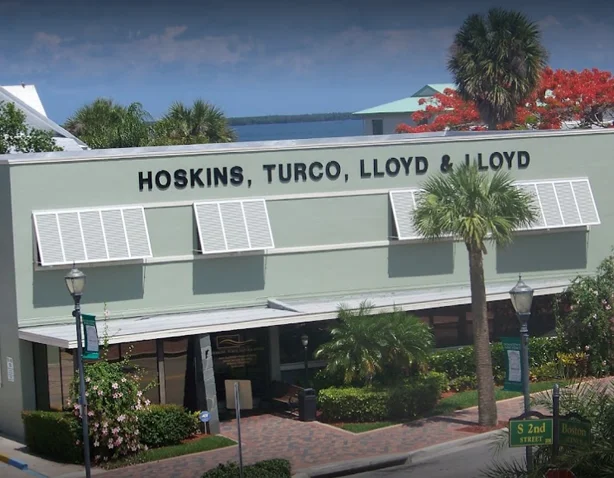
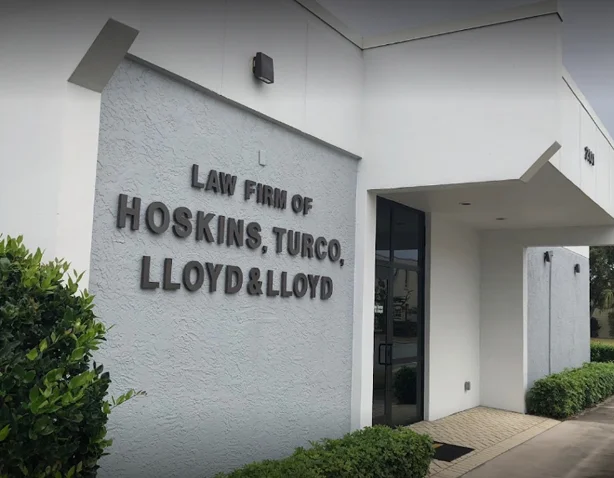
We serve clients throughout the Treasure Coast, with offices in Port St. Lucie, Fort Pierce, Vero Beach and Okeechobee.
Call us today for a free consultation at 866-930-6435.
Are insurance companies using AI to evaluate personal injury claims?
Yes. Insurance companies use AI and machine-learning technologies in claims operations. The NAIC reports uses including accident-image analysis, fraud detection and estimating ultimate claim settlement values.
Can an insurance company use AI to calculate my settlement?
AI and automated claims software can help insurers estimate claim values and potential settlement ranges. However, an algorithm’s estimate does not establish the legal value of your personal injury claim.
What is Colossus insurance claims software?
Colossus is a claims-evaluation software program associated with the valuation of certain bodily-injury claims. It can use information entered about an injury claim to help generate a settlement range.
Can AI undervalue a personal injury claim?
AI-assisted systems may fail to capture every individualized consequence of an injury, particularly when important facts are missing or inadequately documented. Regulators have also identified transparency, bias and accuracy as issues requiring attention in insurers’ use of AI and big data.
Does AI make medical documentation more important after an accident?
Potentially, yes. When claims are analyzed using data-driven tools, complete and accurate documentation gives both automated systems and human adjusters more information about the nature, severity and consequences of an injury.
Does an insurance company’s computer-generated settlement amount determine what my case is worth?
No. An insurer’s valuation or settlement offer is its assessment of the claim. It is not automatically the amount an injured person is legally entitled to recover.
Is AI use by insurance companies regulated?
Yes. Insurers remain subject to applicable insurance laws and regulations when using AI. The NAIC has developed principles, a Model Bulletin and regulatory evaluation initiatives addressing insurers’ use of artificial intelligence.
Should I accept an insurance company’s first settlement offer?
Not automatically. Before accepting a settlement, an injured person should understand the extent of their injuries, damages, future medical needs and available insurance coverage. For significant injuries, speaking with a qualified personal injury attorney before signing a release can help protect your rights.
When should I contact a Florida personal injury attorney?
Consider contacting an attorney promptly when you have suffered a significant injury, liability is disputed, the insurer requests extensive information, your claim is denied, or the settlement offer appears inadequate. Hoskins, Turco, Lloyd & Lloyd offers free consultations for Florida personal injury matters.
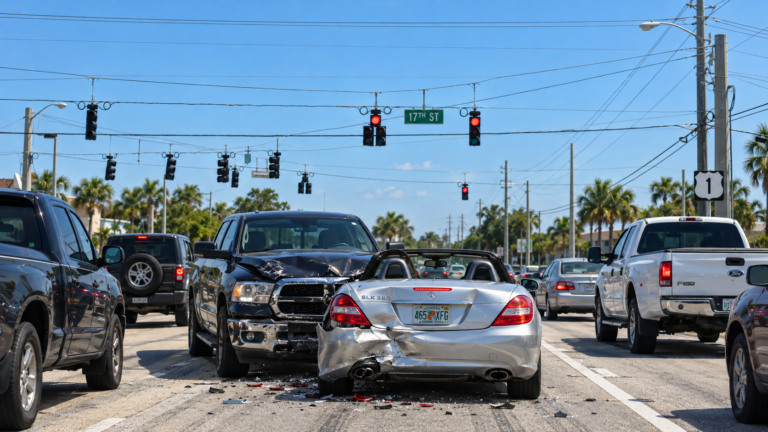
If you live or work in Indian River County, or frequently visit the beautiful Treasure Coast region, you will inevitably
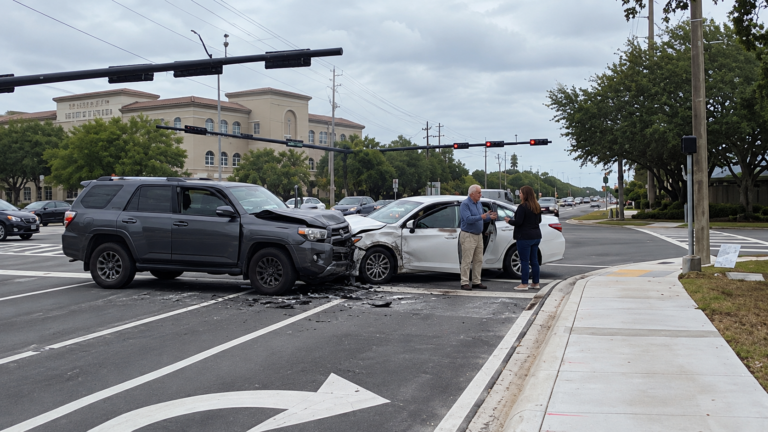
Snowbird season brings more drivers—and unique accident risks—to Vero Beach and the Treasure Coast. Learn what to do after a
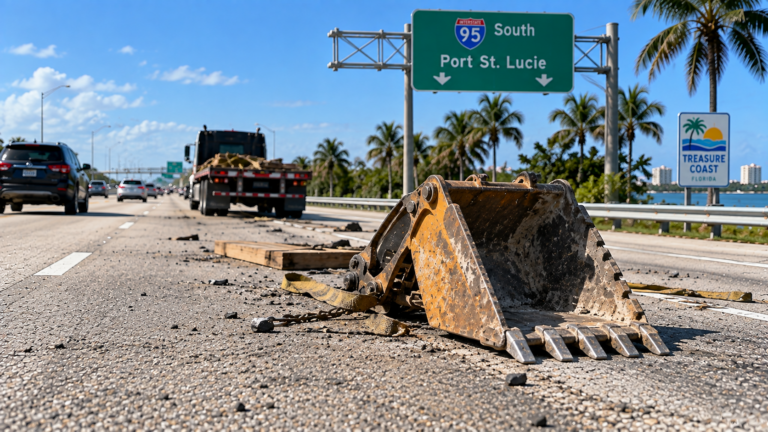
You’re driving down I-95, Florida’s Turnpike, US-1, or another Treasure Coast highway when suddenly there’s an object in your lane—a
Phone: (772) 344-7770
Fax: (772) 344-3838
Phone: (772) 464-4600
Fax: (772) 465-4747
Phone: (772) 577-7551
Fax: (772) 794-7773

Phone: (863) 357-5800
Fax: (863) 763-2237
As the law firm Florida has trusted for over 40 years to fight on their behalf, we are more than ready to represent you. Put our experience and reputation to work. If you need help with any legal matter, whether it’s a personal injury, workers’ compensation, disability or bankruptcy case, contact us now. The consultation is absolutely free.
Get the answers you need. We’ll review your case today, for free.
Se Habla Español
"*" indicates required fields
 Port St. Lucie